
Canopy Raising vs. Crown Reduction: What’s the Difference?
Lower branches brushing a roof and overextended limbs need different pruning decisions. Start with the clearance you need, then choose the cuts the tree can support.
By Kevin’s Tree Service · Central Florida tree care
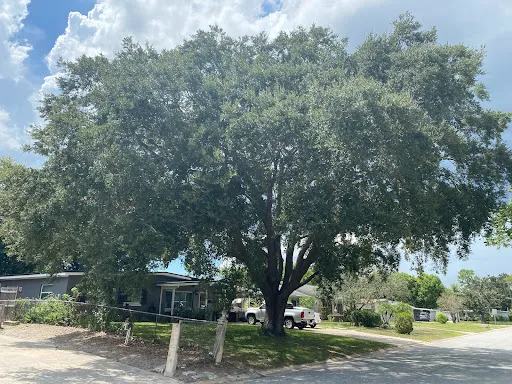
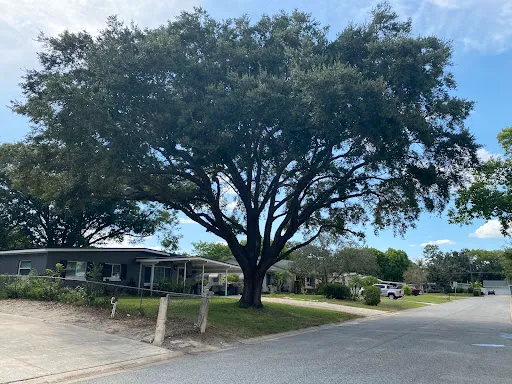
The quick answer
Canopy raising creates clearance beneath a tree. Reduction shortens selected branches to suitable laterals. Both should preserve useful foliage and structure; neither means topping the tree.
When lower branches become a problem
Branches can interfere with driveways, sidewalks, roofs, fences and sightlines. Canopy raising removes selected lower branches to address those conflicts. The goal is usable clearance, rather than the highest possible bare trunk.
- Identify the route or surface that needs clearance.
- Show the estimator where branches touch structures or obstruct access.
- Discuss whether a smaller adjustment can meet the goal.
Removing too many lower limbs can leave a tree unbalanced or short of foliage. A full-looking canopy does not by itself mean the tree needs thinning.
Raising and reduction solve different problems
| Method | Purpose | What to avoid |
|---|---|---|
| Canopy raising | Create space beneath selected lower branches. | Stripping the lower trunk simply for a high, uniform line. |
| Crown reduction | Shorten selected overextended branches while retaining suitable lateral growth. | Indiscriminate heading cuts or flat-topping the canopy. |
Reduction may help manage a branch that reaches toward a building, but it is not a promise that a tree will withstand every storm. The condition of the trunk, roots and branch attachments still matters.
What a useful pruning plan should explain
Ask which branches will be worked on, the clearance goal and how much foliage will remain. Kevin’s Tree Service uses ISA Certified Arborist oversight and ANSI A300 pruning practices. We do not top trees.
Tell us about rooflines, pool screens, irrigation, septic areas and equipment access. Branches near electrical lines require utility coordination and qualified professionals; do not attempt that work yourself.
The estimate should also say whether brush and logs are hauled away. Cleanup follows the agreed written scope.
Timing, price and the next visit
Species, condition and the size of the proposed cuts influence timing. Have an actual problem assessed rather than applying the same schedule to every tree. Access, canopy size, debris handling and nearby structures affect the estimate.
For a broader view of scope and price, read our tree trimming cost guide. For ongoing care, see how often to trim your trees.
Common questions
Is canopy raising the same as topping?
No. Raising selectively removes lower branches for clearance. Topping indiscriminately cuts back major branches or leaders. Kevin’s Tree Service does not top trees.
How much clearance do I need over a sidewalk or driveway?
The needed clearance depends on the use of the space and any applicable local requirements. Show us where people or vehicles need to pass so the pruning scope can address that route.
Can raising and reduction be done in one visit?
Yes, when both are appropriate for the tree. The scope can combine lower-branch clearance with reduction of selected overextended limbs.
Is cleanup included?
Cleanup and hauling follow the written estimate. Confirm whether brush and logs are removed or left on site.
Is an arborist assessment included in a free estimate?
Tree-work estimates are free. Arborist assessments, consultations and letters are separate paid services; confirm the service you need when booking.
Is crown thinning the same as canopy raising?
No. Crown thinning selectively removes some branches inside the canopy to reduce density. Canopy raising removes selected lower branches for clearance, and crown reduction shortens selected branches. Thinning should be limited; stripping too much interior foliage can weaken a tree.
Have a tree question about your property?
Tell us what you are planning and what has changed. We’ll help define the tree-work scope.
Get a Free EstimateOn-site tree-work estimates are free. Arborist assessments and letters are separate paid services.


