
Preparing Trees for Hurricane Season: Seven Practical Steps
Prepare while there is time to assess the trees and agree on a work plan. The aim is to address avoidable problems, while recognizing that no pruning or removal plan eliminates every storm risk.
By Kevin’s Tree Service · Central Florida tree care
The quick answer
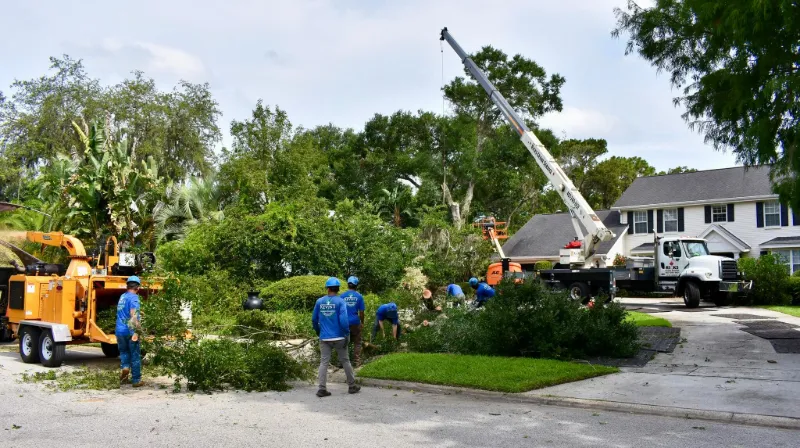
Start with tree condition and what a failure could strike. Arrange selective pruning or removal when warranted, clear loose debris and plan how to keep people away from hazards after a storm.
Four things to arrange before a storm
1. Have concerning trees assessed
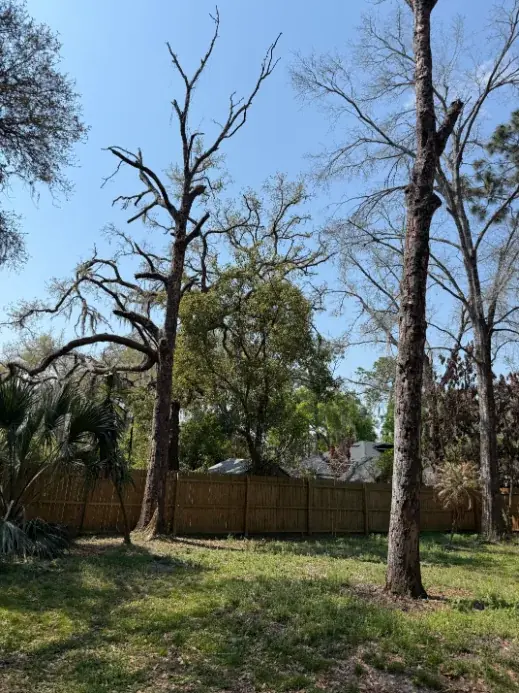
Cracks, dead or broken branches, cavities, root movement and changes in a lean deserve attention. Look from a safe place and tell the tree professional what has changed. A formal arborist assessment is a paid service, separate from a free tree-work estimate.
2. Prune for a defined reason
Address damaged limbs and structural or clearance concerns with an appropriate pruning plan. Avoid blanket thinning, topping and stripping out interior foliage.
3. Evaluate weak unions and split trunks
Have defects assessed before deciding whether pruning, monitoring or removal is appropriate. Do not try to pull down a hanging branch or stabilize a splitting tree yourself.
4. Address removals that are warranted
A tree’s condition, surroundings and potential targets should guide the decision. Disease symptoms or a large canopy alone do not automatically establish a need for removal.
Two steps for the rest of the property
5. Clear loose yard debris
Pick up fallen branches and other loose material while conditions are safe. Keep access routes available. Discuss hauling with the contractor instead of assuming debris can remain beside the road.
6. Plan replacement trees for their mature size
Where replacement planting is planned, consider the available root space, eventual canopy and site conditions. Choosing a suitable tree and location is a long-term decision rather than a last-minute storm task.
7. Check the property safely after the storm
Keep people and vehicles away from damaged trees, hanging limbs and downed wires. Treat any wire as dangerous. If a tree is moving, splitting or threatening people or a building, keep clear and get help.
Photograph damage only from a safe position. Contact your insurer for its documentation requirements. For blocked access or urgent damage, use our emergency tree removal page; urgent hazards and access are prioritized before later cleanup and stump work.
A standing tree can still have damage that is difficult to judge from the ground. Arrange professional advice when the condition is uncertain rather than climbing or cutting into it yourself.
Build a useful work list
Separate immediate concerns from routine clearance and later restoration. Tell us about gates, pool screens, septic areas, irrigation and overhead lines. That information helps shape access and equipment planning.
Agree on which trees are included, the pruning or removal scope and whether debris is hauled away. Confirm stump work separately. Read the dangerous trees guide for more detailed warning signs.
Common questions
Will pruning make a tree storm-proof?
No. Appropriate pruning can address specific problems, but wind, soil conditions and tree defects still affect risk.
Should I remove a large tree before hurricane season?
Size alone is not a reason for removal. Have the tree’s condition, surroundings and potential targets assessed before deciding.
Do palms need hurricane cuts?
No. Keep healthy green fronds and avoid heavy hurricane cuts. Palm care should follow the species and actual condition.
What if a tree or branch is touching wires?
Stay away and contact the utility or emergency services as appropriate. Do not touch or cut the tree, branch or wire.
Have a tree question about your property?
Tell us what you are planning and what has changed. We’ll help define the tree-work scope.
Get a Free EstimateOn-site tree-work estimates are free. Arborist assessments and letters are separate paid services.


