
Stump grinding or stump removal?
Start with what comes next.
A smoother lawn, a replacement tree and a new building project can call for different work. Here’s how to choose the scope that fits your plans.
By Kevin’s Tree Service · Central Florida tree care
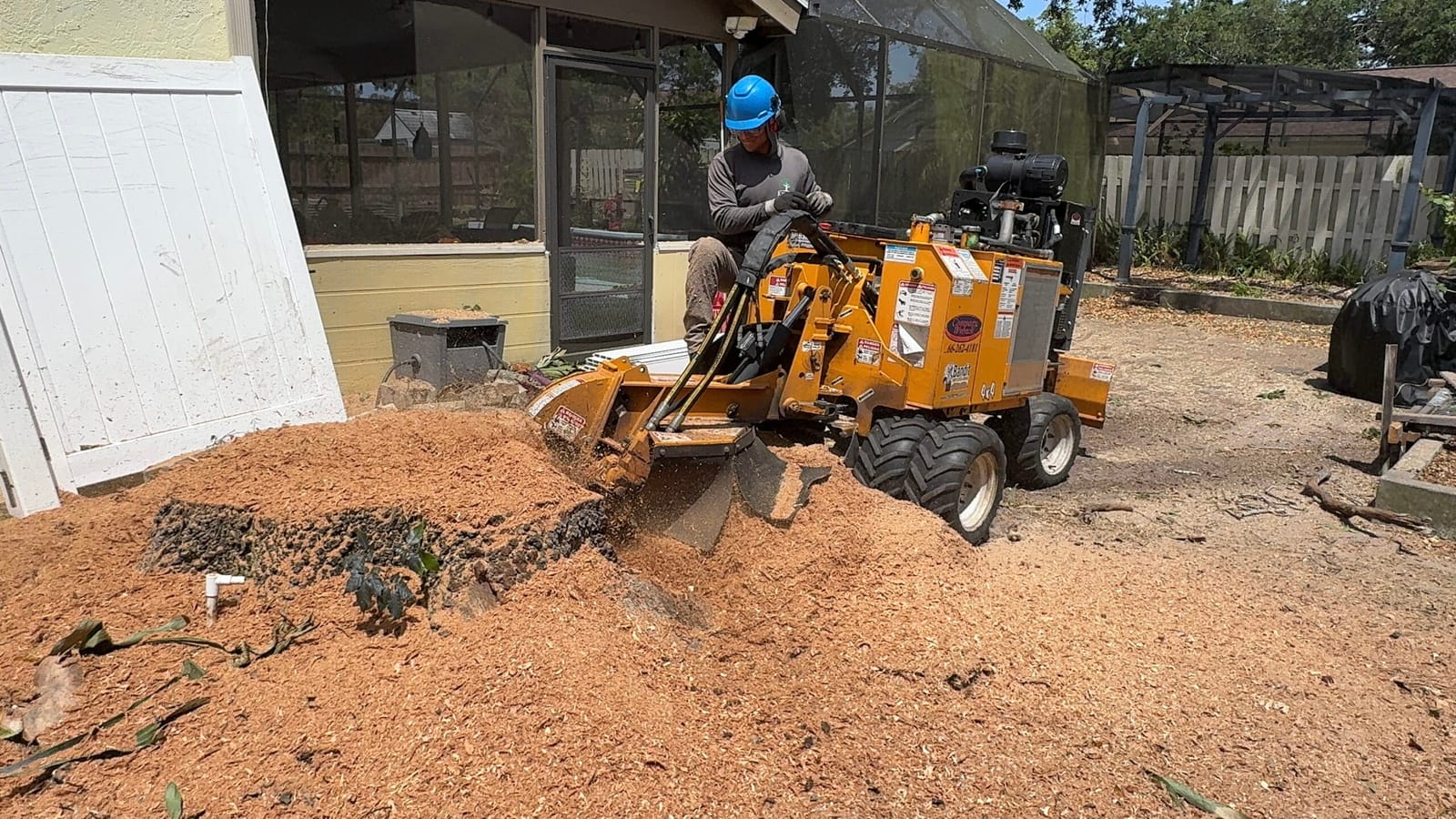
The quick answer
Grinding is usually the less disruptive way to reduce a stump below the lawn. Extraction removes the stump and root ball by excavating them. If you want to build or replant in that spot, discuss those plans first—neither choice automatically leaves a finished, planting-ready site.
Two methods, different outcomes
What actually gets removed?
Grinding uses a cutting wheel to break the stump into small pieces. Extraction digs out the stump and root ball. The important difference is what stays below ground and how much soil is disturbed.
| Your question | Stump grinding | Stump extraction |
|---|---|---|
| What comes out? | The stump is ground to the agreed depth. | The stump and root ball are excavated. |
| Do roots remain? | Yes. Most roots remain. | Roots beyond the excavation can remain. |
| What happens to the yard? | Usually less disturbance, with grindings to manage. | A larger excavation, usually requiring backfill and restoration. |
| What affects the price? | Size, access, depth and cleanup scope. | Root-ball size, access, excavation, hauling and restoration. |
Grinding is generally less costly than extraction, but compare written scopes. A price that leaves grindings on site is different from one that includes hauling and restoration.
Agree on depth—and what happens to the grindings.
Typical stump grinding is about 4–12 inches below grade, depending on the scope and site. Our standard grinder reaches about 15 inches at most. Deeper work requires different equipment and separate pricing.
Grinding leaves a mix of wood chips and soil. Decide whether it stays on site or is hauled away, and whether backfill and finish grading are included. Those details should be written into the estimate.
Access matters too. Gates, slopes, nearby structures, irrigation and underground utilities can change the approach. Point out known lines and sensitive areas before work is planned.
Tell us what you want to do with the space.
Returning it to lawn?
Grinding may fit the job. Ask about removing excess wood, adding suitable soil and finishing the area.
Planting or building?
Explain the location and size of your project. Additional excavation or site preparation may be needed.
Remaining roots and buried wood can interfere with planting. A replacement tree or large palm may need a different location or more preparation. Do not plan a same-spot planting on grinding alone.
Before you accept an estimate
- Confirm the stump count, approximate sizes and access route.
- Agree on grinding depth or excavation scope.
- Specify whether grindings, roots and debris stay or are hauled away.
- Confirm what backfill, grading or lawn restoration is included.
- Describe any planting, construction or other work planned for the area.
A few useful details
Common stump questions
Does stump grinding remove all the roots?
No. Grinding reduces the stump below the soil surface. Most roots remain in the ground and break down over time.
How deep does KTS grind a stump?
Typical grinding is about 4–12 inches below grade, depending on the agreed scope and site conditions. Our standard grinder reaches about 15 inches at most. Deeper work requires different equipment and separate pricing.
Can I plant a new tree in exactly the same spot?
Do not assume a ground stump leaves a planting-ready site. Wood, remaining roots and soil conditions may require additional excavation and soil preparation. Tell us what you want to plant before the work is quoted.
Are the wood chips and grindings hauled away?
Cleanup depends on the written scope. Confirm whether grindings stay on site or are hauled away, and whether backfill and finish grading are included.
Does extracting the stump remove every root?
No. Extraction removes the stump and root ball within the excavation. Roots beyond that area can remain, and some species may still send up shoots.
Let’s plan the right stump work.
Tell us what is there now and what you want the space to become. We’ll help define the scope before work starts.
Get a Free EstimateOn-site tree-work estimates are free. Arborist assessments and letters are separate paid services.
Keep planning
Tree removal services
Plan the tree work that comes before the stump.
Tree removal cost guide
Understand the factors behind a removal estimate.


